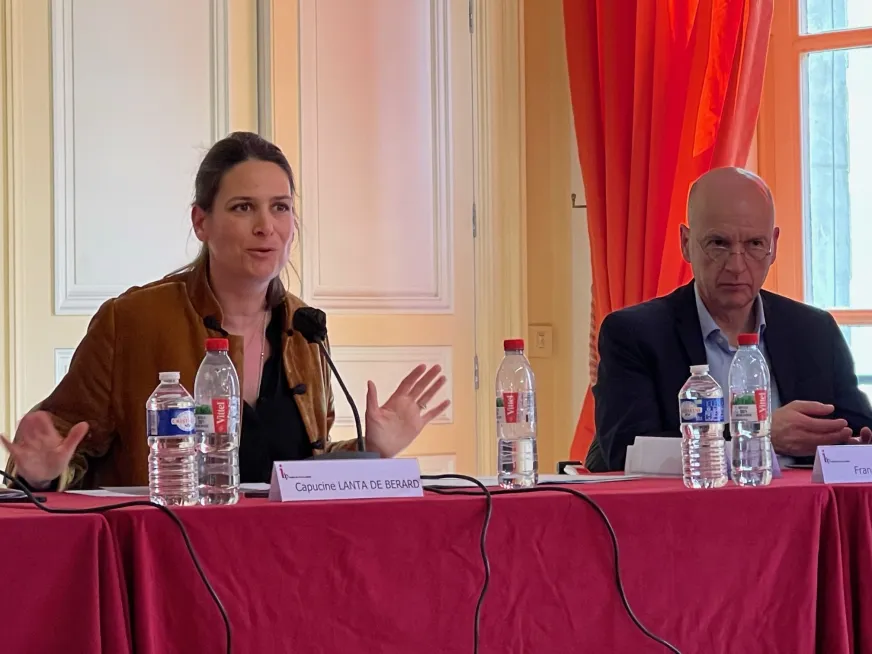
A rich day, featuring, alongside Capucine, complementary perspectives on the art of persuasion:
⚖️ Philippe Bonfils, on pedagogy as the key to judicial eloquence and the power of images that stay with the judge right up to the deliberations
⚖️ Marie-Alix Canu-Bernard, on traditional oral argument and the striking modernity of the great litigators of the past
⚖️ Roksana Naserzadeh, on the necessity of arguing the law before the criminal court, right up to sentencing
⚖️ Raphaël Kempf, on militant defense, from the trial of the Chicago Seven to the Bar-le-Duc trial
⚖️ Ulrika Delaunay-Weiss, on what the judge sees and hears, particularly in summary proceedings
Capucine Lanta de Bérard’s presentation focused on a topic that may seem paradoxical in a field dominated by oral communication: persuading through writing. Written submissions do not compete with oral arguments; rather, they prepare the ground for them. Starting with the preliminary inquiry and continuing through the investigative phase, they allow one to “plant a seed” in the proceedings: a letter to the prosecutor’s office, a rejected request for an expert opinion, or a comment on an expert’s mandate all serve as milestones that will demonstrate to the trial judge that the issue raised is serious and not merely a ploy for the courtroom. The most technical tools, such as the QPC, should not be reserved for “major cases”: they have their place even in summary proceedings. Above all, written submissions compel the court to respond, under the oversight of the Court of Cassation. To be effective, one must keep the “judge reading the brief” in mind: reasoning that is sound, fluid, and straightforward—without aggression—and grounded in the evidence to guide the judge’s work. But a written submission also sets things in stone: it must always be part of a strategy that assesses risk, and sometimes, to be persuasive, it is better not to write anything at all.
Thank you to the organizers and all the speakers for the quality of the discussions.
#CriminalDefense #Attorney #OralArgument #CriminalLaw #CriminalProcedure
To learn more about the Institute of Criminal Defense: https://www.defensepenale.com