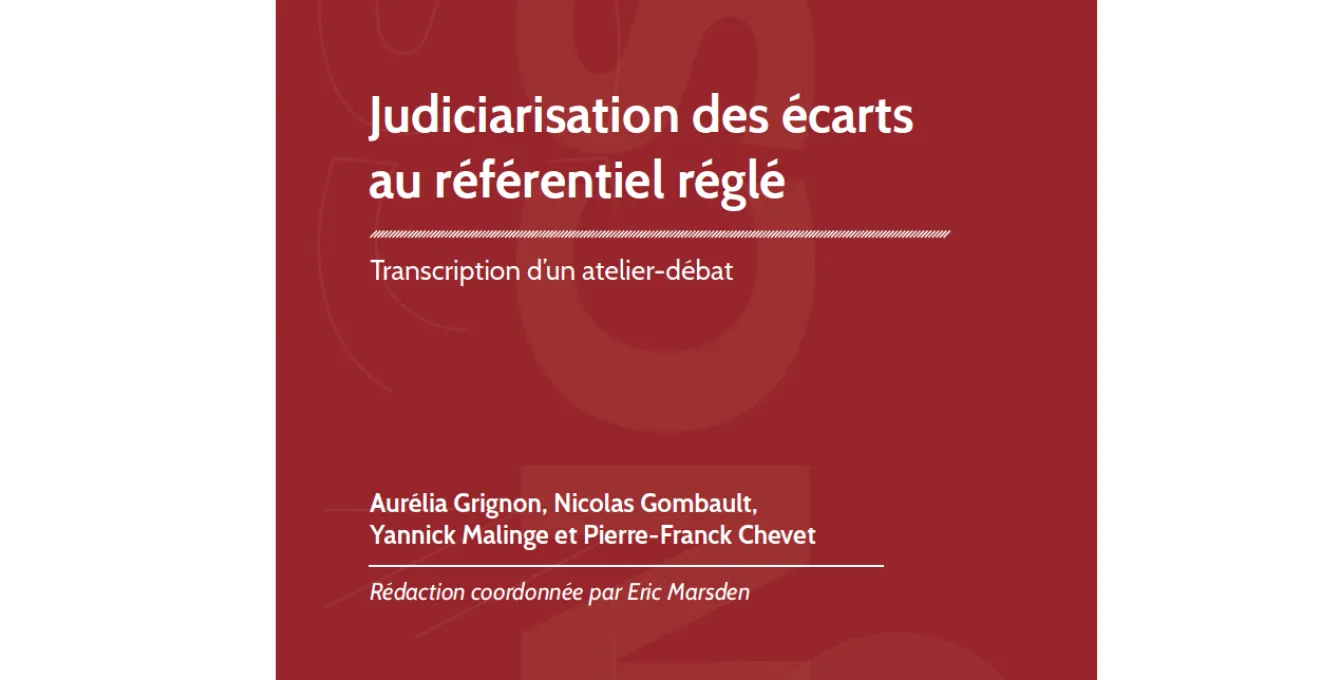
Aurélia Grignon, managing partner of the firm, spoke on September 17, 2024, at an online workshop and discussion organized by the Foundation for a Culture of Industrial Safety (Foncsi). She participated in a discussion with Nicolas Gombault, deputy CEO of the MACSF insurance group, and Yannick Malinge, Head of Airbus Aviation Safety. Pierre-Franck Chevet, CEO of IFP Énergies Nouvelles, moderated the discussion.
The workshop’s theme was as follows: in post-accident investigations, the justice system tends to view culpability as greater the larger the deviation from the standard, treating this standard as an algorithm to be followed rather than as a guide. The speakers discussed the extent to which the judicial system is able to move away from the “deviation → culpability” principle, and what the consequences are for professionals and companies.
Drawing on her experience with major industrial disaster and aviation accident cases, Aurélia Grignon outlined several observations:
🔹 The pressure to find a culprit. In major disasters, public sentiment puts pressure on the judicial system to identify someone responsible. In France, the justice system tends to systematically criminalize accidents—even in the absence of proven regulatory violations—by relying on the less clearly defined concepts of “negligence” and/or “gross negligence.”
🔹 Due diligence: A Limit to the “Deviation = Guilt” Principle. Article 121-3 of the Penal Code requires that due diligence be assessed based on the specific circumstances and the information available at the time of the decision. This argument has led to acquittals, notably in the Concorde case, but often only after very lengthy proceedings.
🔹 A counterproductive effect on safety. Legal action may deter stakeholders from reporting anomalies, even though feedback is essential for the continuous improvement of safety.
🔹 The need for a framework. Aurélia Grignon noted, however, that legal certainty requires a clear framework for assessing violations. Change is possible, but it must come from the professionals themselves, who are best positioned to define appropriate behavior when faced with the unexpected.
The firm is pleased to have been able to share its experience in criminal law related to accidents and disasters in this dialogue between the judicial and industrial safety communities.
The transcript of the debate is published in the *Cahiers de la Sécurité Industrielle* (No. 2024-10) and is available on the Foncsi website : https://www.foncsi.org/publications/judiciarisation-ecarts-referentiel-regle.