Public health criminal law: 16 years of legal proceedings. An acquittal.

The law firm Soulez Larivière Avocats represented a corporation before the Marseille Criminal Court in a case involving charges of fraud, some of which dated back more than 19 years.

Image
CLB et TB

On February 9, 2026, the Marseille Criminal Court (Public Health Division) acquitted our client, a manufacturer of cochlear implants, of the charges of fraud.
The allegations primarily concerned the company’s failure to comply with its obligations regarding the affixing of the CE marking, claims of compliance with standards, and various irregularities related to the materials used in the composition of the implants marketed by the company.


In the context of the PIP case, an investigation followed by a judicial inquiry was opened by the Marseille Public Prosecutor in 2013 and assigned to an investigating judge from the Public Health Division of the Marseille Judicial Court.


In February 2025—sixteen years after the proceedings began—the company and several of its former executives were referred to the Marseille Criminal Court to stand trial on charges of fraud.


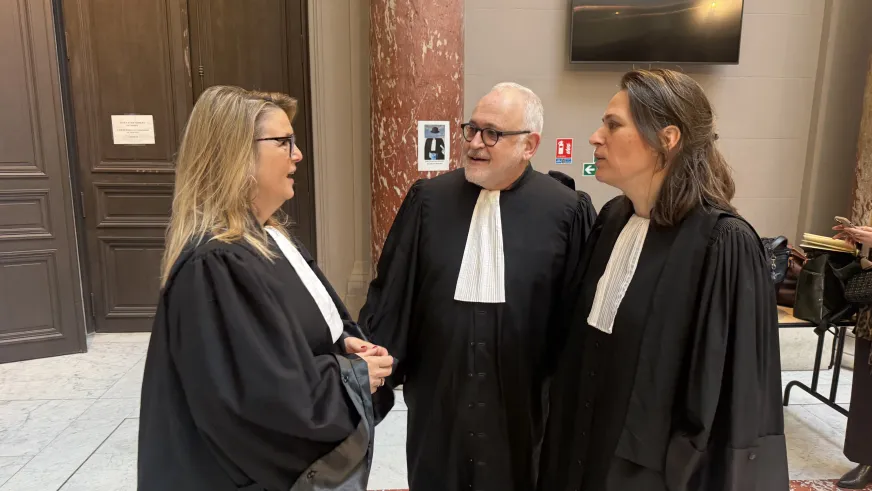
At the hearing, held in November 2026, the law firm Soulez Larivière Avocats—assisted by Capucine Lanta de Bérard, as well as Tom Bruneau and Pauline Boone—filed a motion to dismiss the case on the grounds of excessive delay, arguing that neither the circumstances of the case nor the company’s conduct during the investigations justified such a lengthy delay.


On the merits of the case, the firm argued for the company’s acquittal. During the four-day hearing before the Criminal Court, marked by highly technical arguments, the firm’s attorneys worked to demonstrate, point by point, that the offense of fraud had not been established and that the case put forward by the Public Prosecutor’s Office was unfounded.


After several months of deliberation, the Marseille Criminal Court rendered its judgment.

⚖️ An expressly found violation of the right to a trial within a reasonable time

The Court, citing the provisions of the preliminary article of the Code of Criminal Procedure and Article 6 of the European Convention on Human Rights, found a violation of the defendants’ right to be tried within a reasonable time. It emphasized in particular that the length of the proceedings was not attributable to any maneuver on the part of the defense, whose sole recourse had been to “legitimately request the opportunity to examine more than 11,000 pieces of evidence” submitted shortly before the conclusion of the preliminary investigation.

Thus, and in accordance with the case law of the Court of Cassation, as established in the Criminal Chamber’s ruling of November 9, 2022, in the case known as “the La Défense boiler room,” the Court stated that it must take “into consideration the possible deterioration of evidence attributable to the time that has elapsed since the date of the events and the resulting impossibility for the parties to discuss its value and scope.”

And it concluded: the proceedings, “which have lasted a total of 16 years since the complaint was filed, do not meet the legal and treaty requirements to be tried within a reasonable time.”

The court also assesses the practical effects of this length of time: “The age of the events distorts the rules governing the presentation of evidence,” forcing the court to examine conduct dating back “19 years before the trial,” even though the defendants “have not been heard in the proceedings for more than seven years.”

⚖️ Acquittal on the Merits

In accordance with the case law of the Criminal Chamber, this procedural violation does not result in the annulment of the proceedings, but requires the judge to draw the appropriate conclusions regarding the evidence. The court therefore examined the three charges on the merits and dismissed them all.

Regarding the ceramic used in the implants, the court held that it is “clearly established” that its composition was not altered, and established a key principle: “the offense of fraud cannot relate to a potential alteration of the product.”

It noted that there was no evidence demonstrating “malicious intent on the part of SAS NEURELEC to deceive its contracting parties,” and that the notified body “had always maintained the certificates of conformity and the CE marking for the cochlear implants.”

Finally, it finds that the devices allegedly marketed without certificates were in fact covered by existing certificates or were custom-made devices.

This decision serves as a reminder of a fact that is all too often overlooked: the judicial process is not neutral. For a company, being sued for more than a decade means living with an accusation that weighs heavily on its reputation, its partners, and its teams—far beyond the courtroom.

Image
NRL

News

Legal news from Soulez-Larivière Avocats: conferences, articles, cases, life at the firm — follow our latest news.