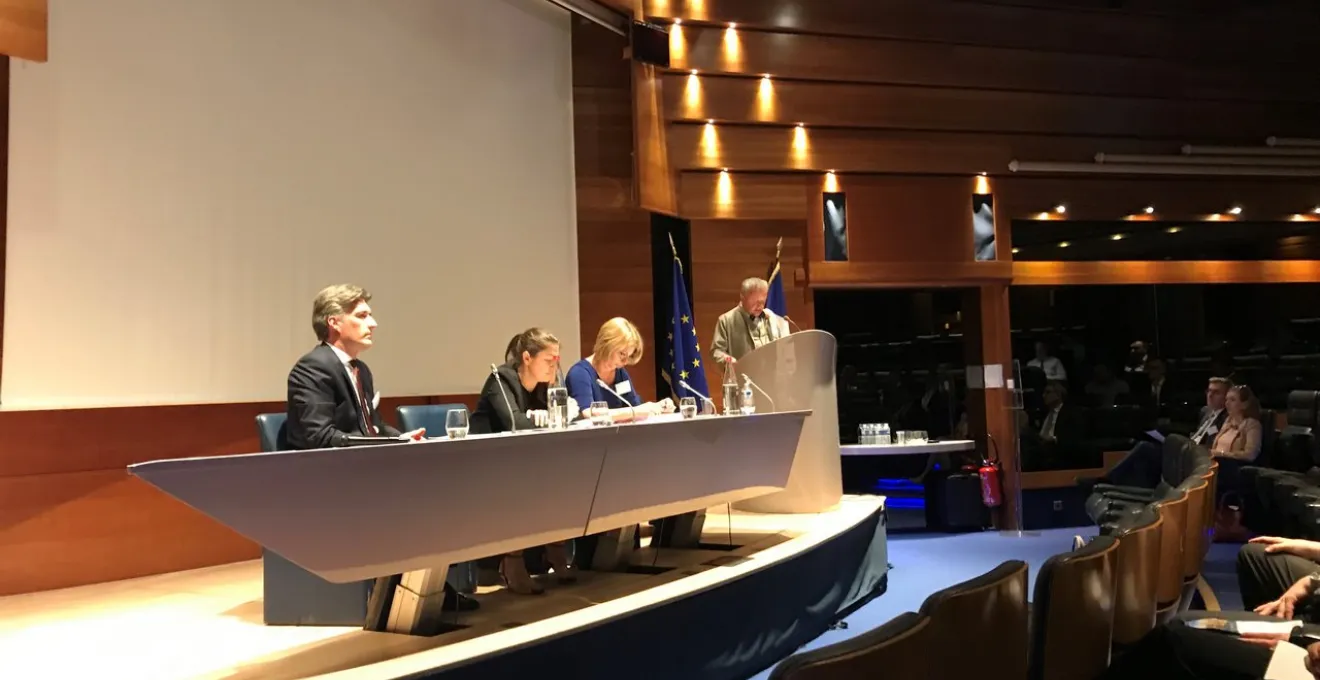
Three years after the Sapin II Act went into effect, the EFCL (European Fraud and Compliance Lawyers) association dedicated its annual conference to the theme “Corruption and Corporate Responsibility.”
The first panel, “Combatting Bribery in Europe: Sapin II as a Benchmark,” was chaired by Vincent Asselineau, president of the ECBA. The panel featured Maarten ‘t Sas (Simmons & Simmons), Shula de Jersey (BCL Solicitors), and Aurélia Grignon representing the firm. Aurélia Grignon, a partner at the firm, spoke at the annual conference of the European Fraud and Compliance Lawyers (EFCL), held in Paris on the topic of “Corruption and Corporate Responsibility.”
The speakers compared the mandatory compliance regime established in France by the Sapin II Act with the British and Dutch approaches, which are based on guidelines and the legal defenses available to companies.
Aurélia Grignon presented the French framework and its initial practical lessons:
🔹Compliance programs. The requirement for companies with more than 500 employees has become a benchmark for best practices, even beyond its scope of application.
🔹 The role of the AFA, acting as both advisor and regulator, with an approach based on companies’ good faith rather than on immediate sanctions.
🔹 Whistleblowers. Protection is reserved for whistleblowers acting in good faith and without personal interest. The panel discussed the pros and cons of financial incentives, which the draft European directive leaves to the discretion of member states.
🔹 Voluntary disclosure and CJIP. These tools, inspired by the U.S. model, establish a new form of cooperation with the public prosecutor’s office that is unprecedented for French attorneys. They still raise many questions, particularly regarding the actual benefits of cooperation and the fate of documents submitted should negotiations fail.
The day continued with a panel discussion on the representation of companies in cross-border investigations, followed by a presentation by Frédéric Pierucci on the lessons learned from the Alstom case.
These discussions provided an opportunity to compare French practice with that of our European neighbors, at a time when negotiated settlements were taking their first steps in France.
https://www.efcl.eu/content/index.php/conferences/past/25-paris-france-…